Night Picnic is a literary journal which publishes novels, novellas, plays, short and flash stories, fairytales for adults, poetry, interviews, essays (including popular science essays), letters to the editors, and artwork.
Saturday, October 31, 2026


Call for Art Submissions: Art Calendars: Syracuse Cultural Workers
Call for Art-Calendars
We seek art that instigates activism... art that challenges the powerful...
that sustains and educates... celebrating our efforts for justice and peace.
Sign up to receive our periodic Call for Art emails. 
Begun in 1972. An inspiring celebration of peace, justice, resistance and hope. Wall calendar, horizontal format, top art size 12x12”.
Submission Deadline for next year March 21, 2027 - early submissions are strongly encouraged and very helpful for our process!
As always, the calendar will celebrate peace, justice, resistance and hope. Check out artwork from the last four calendars organized by month.
FORMAT - Image Size - 12 x 12" full bleed
Limit - 8 images may be submitted, up to 5 MB each, in any media or subject matter
Include - artist name and title in file name - example: janedoe_circleoflife.jpg
File Types - PDF, JPEG, PNG and TIFF
Cover/inside artwork: $400 plus 6 free calendars.
Inside artwork: $250 plus 3 calendars.
Commissioned artwork: $300 plus 5 calendars. Artwork selected for grids: $50 plus 2 calendars.
Calendar artists may purchase additional calendars at a 40% discount; 15 or more at 50%.
THEMES: Defend Immigrants, Resist ICE, Preserve DEI – Celebrate Multiculturalism,
Don't whitewash history, Queer, LGBT+, Protect Trans Lives, Intersectionality, Anti-War, Anti-Imperialist, Protecting Voting Rights, Creative Resistance, Compassion & Community Building, Feminism, Reproductive Rights/Justice, Resist Patriarchy, Defend democracy, Turn Back Fascism, Intellectual freedom, Critical Thinking, Artificial “Intelligence”, Indigenous Rights, Climate/Environmental Justice, Disability Rights, Racial Justice, Food Sovereignty, Housing As a Human Right, Peoples History, Education...
Submit art as pdfs, jpegs, or tiffs, photos (limit 8) via this online form
Please label EACH item with your name, address, title, medium and year.
Call for Submissions of Solarpunk Fiction: Burnline
Please submit work you would specifically describe as solarpunk (or something close to it). No cover letter is needed for submissions, but feel free to include any information about your relationship to the story if you feel that it's relevant.
Submissions are open to creators ages 18 and older.
Word limit 500–10,000 words.
Pay rate
Because Burnline is currently a free magazine without advertising, we cannot offer payment at this time. Our goal is to eventually pay a competitive per-word rate, but we are not there yet. We understand if that makes submission a non-starter for you.
How to submit
Use the Burnline submission form to send your story. Select Fiction, fill in the required details, and upload your manuscript as a .doc, .docx, or .pdf. Please submit one piece per form.
Human-created work only
No AI-generated or AI-assisted work will be accepted. Burnline is interested in fiction created by people.
Simultaneous submissions are welcome. Please submit elsewhere while you wait! Just let us know promptly if another publication accepts the story.
Submit your work here.
Writing Grant: The Gulliver's Travel Grant for Speculative Literature
The Gulliver's Travel Grant
OPEN NOVEMBER 1 – NOVEMBER 30, ANNUALLY
Award: $1,000 USD.
Winner announced within three months.
Since 2004, the Gulliver Travel Grant has been awarded annually to assist writers of speculative literature in their non-academic research. These funds are used to cover airfare, lodging, and other travel expenses. Travel may be domestic or international. You may apply for travel to take place at any point in the following year.
This grant, as with all SLF grants, is intended to help writers working with speculative literature. Speculative literature spans the breadth of fantastic writing, encompassing literature ranging from hard science fiction to epic fantasy, including ghost stories, horror, folk and fairy tales, slipstream, magical realism, and more. Any piece of literature containing a fabulist or speculative element would fall under our aegis.
This grant is awarded on the basis of interest and merit. If awarded the grant, the recipient agrees to provide a brief report of their research experience (500-1,000 words) and an autobiographical statement describing themselves and their writing (500-1,000 words) for our files and for public dissemination on our website and mailing list.
Please note that the goal of these grants is to help as many writers as possible, so recent winners can reapply but will be considered low-priority within a 2-year window of winning.
Grant Application Process
The application form for the Gulliver Travel Grant is only active during the open submission period: 12:00AM November 1 – 11:59PM November 30, Annually (All times UTC -4). Required materials include:
- A cover letter: Include a one-page written description of the project, including details on the travel location and an estimated completion date (no more than 500 words), and a bibliography of previously published work, if applicable. Applicants need not have prior publishing credits to apply.
- A writing sample: Up to 10 pages of poetry, 10 pages of drama, or 5,000 words of fiction or creative nonfiction. If you are sending a segment of a novel, novella, or novelette, please include a one-page synopsis as the first page of the document. The submitted work must be speculative, as defined above.
Writing Competition: The Gregory O'Donoghue International Poetry Competition
Gregory O’Donoghue International Poetry Competition
Open for entries
1 September – 30 November
Results posted in February
Most recent results here
Line limit: 40
Closing date: 30th November (midnight)
Entry fee: €7 per poem
The competition is open to original, unpublished and unbroadcast poems in the English language of 40 lines or fewer. The poem can be on any subject, in any style, by a writer of any nationality, living anywhere in the world. Translated work is not in the scope of this competition. Once entered, no alterations can be made to the submission. Simultaneous submissions are accepted but please notify us immediately should your work be accepted elsewhere.
Prizes
1st Prize €2,000
Featured reading at the Cork International Poetry Festival with four-night hotel stay (if living outside Cork) and full board
Featured on the Southword Poetry Podcast
Publication in Southword
Previous first prize winners may not enter again
2nd Prize €500
Publication in Southword
3rd prize €250
Publication in Southword
ten Runners-Up €50
Publication in Southword
2026 Judge: Shangyang Fang
Email entry
Send to:
godcomp@munsterlit.ie
Subject: GOD entry
Attach the poem(s) for submission, with each poem attached separately (Word / RTF/ ODT – we cannot accept PDFs or weblinks such as Google Drive). Please use the title of the poem (or the first few words of the title) as the title of each document. As the competition is judged anonymously, we request that you do not write your name or personal details anywhere on this document.
Attach the cover letter (separate text document (Word / RTF / ODT – we cannot accept PDFs or weblinks such as Google Drive) attached to the same email, not in the body of the email). The cover letter should include:
Your name
Poem title(s)
Email address
Email associated with your PayPal account (if different from your contact email address)
Phone number
Postal address
Image of PayPal receipt or the PayPal transaction ID number
How your heard about the competition
A brief bio (optional)
Make your entry fee payment here.
Wednesday, October 28, 2026
Writing Competitions: The Baltimore Review Prizes for Flash Fiction, Flash Creative Nonfiction, and Prose Poetry
The Baltimore Review Contests for Flash Fiction, Flash Creative Nonfiction, and Prose Poetry
No theme! Subject matter is entirely up to you. Surprise us.
But keep it short. See how much you can accomplish, how much of an impact you can have, with a small number of words. We want to wonder how you abracadabra words into magic. We want to be amazed and maybe a little jealous of how you do that.
One writer in each category will be awarded a $400 prize and published in the winter issue. All entries are considered for publication with payment at our regular rate ($75).
Total word limit for this category is 1,000. The guidelines are the same for flash creative nonfiction and prose poetry No more than 1,000 words for a combination of stories or prose poems. Seriously. And shorter is often better. We love shorts.
Deadline is November 30, 2026.
Fee is $8.
Please do not include your name on your work.
Submit your entry here.
Call for Submissions and Writing Competition: The Georgia Review
The Georgia Review welcomes submissions both online and by post from August 15 to May 15. We do not accept unsolicited manuscripts outside this period.
All manuscripts receive serious, careful attention; each submission is read by a published writer in a salaried position at The Georgia Review. We aim to respond to submissions within ten months. Committed to supporting authors at all stages in their careers, The Georgia Review pays contributors. Journal subscribers can submit for free during our general submissions period (excluding contests); general paper submissions by mail are free (aside from the cost of postage) to subscribers and non-subscribers.
Work previously published in any form will not be considered. Please tell us in your cover letter if your submission is simultaneously being considered elsewhere, and please let us know immediately, via Submittable, if your work is accepted by another publication. Likewise, please notify us if any part of your submission is known to be included in a book already accepted by a publisher (include the anticipated date of book publication).
At The Georgia Review, we view literature as a rich and ever-unfolding human conversation—as demonstrated by our commitment to editorial exchange and our focus on fostering literary community. In keeping with this ethos, we are interested in literature written by humans. Please do not send us work written or assisted by generative AI.
We do not publish work by current University of Georgia students.
To find out more about what we publish, browse the work featured on our website, or consider purchasing a recent issue from our shop.
Online submissions should be sent through Submittable. Each general submission requires a $3 processing fee, with an exception for current print subscribers to The Georgia Review, who may submit online at no cost. Subscribers: Please email:
to receive a link to submit for free, providing the genre of the work to be submitted and your full name and address (including zip code).
Paper Submissions
General paper submissions do not require a submission fee. All paper manuscripts must include a cover letter with your name, mailing address, email address, and phone number. If you’d like to receive our decision by mail, your submission must be accompanied by a postage-paid and self-addressed return envelope. If you would prefer to receive notice of our decision via email (and forgo a return of your manuscript), please indicate this preference in your cover letter. Submissions should be addressed to:
The Editors
The Georgia Review
706A Main Library
320 S. Jackson St.
The University of Georgia
Athens, GA 30602-9009
Payment and Copyright
The Georgia Review’s current standard pay rates for our print issues are $50 per printed page for prose and $4 per line for poetry, up to $800. In addition, all contributors receive two copies of the issue their work appears in and a 50% discount on additional copies of that issue.
The Georgia Review buys first North American serial rights and non-exclusive digital rights only. All other rights revert to the author at publication, but we offer formal, written reassignments upon request. We ask that whenever an author reprints work that first appeared in our pages, The Georgia Review be given acknowledgment for the specific work(s) involved.
The Georgia Review is pleased to announce that our 2027 Prose Prize opens on Sunday, November 1, and will be judged by Vauhini Vara. The best short story and essay will both be published in The Georgia Review. The overall winner, chosen between the two, will receive $1,500. The runner-up will receive $600. All entries will be considered for publication.
The winner and runner-up of last year’s prose prize will be featured in our forthcoming Winter 2026 issue.
- Submissions must be sent either through Submittable between November 1 and January 15 or by regular mail postmarked within the same span of time.
- An entry should include either one short story or one essay. Only one entry per writer.
- No translations.
- Submissions cost $25. Simultaneous submissions are permitted; however, writers must notify us immediately if the work is accepted elsewhere.
At The Georgia Review, we view literature as a rich and ever-unfolding human conversation—as demonstrated by our commitment to editorial exchange and our focus on fostering literary community. In keeping with this ethos, we are interested in literature written by humans. Please do not send us work written or assisted by generative AI.
Postal submissions: Include (1) a cover letter that provides your phone number and email address and (2) a check for $25 for your entry fee. Checks should be made payable to The Georgia Review, and envelopes should be addressed to The Georgia Review Prose Prize, The Georgia Review, Room 706A Main Library, the University of Georgia, Athens, GA 30602-9009. If you’d prefer to be notified by post, please also include a self-addressed, stamped envelope; otherwise, we will notify you by email.
Please note that students, faculty, staff, and administrators currently affiliated with the University of Georgia are ineligible for the contest. Intimate friends, relatives, colleagues, and former or current semester-length students of a judge are also ineligible to enter. Previous winners of our contest should wait three years before entering again.
We can’t wait to read your work!
Call for Submissions: Seam Allowance
Seam Allowance is the invisible expanse between the cutting line and the stitching line.
Seam Allowance celebrates literary experimentation and unconventional style.
Seam Allowance is a margin of excess.
"The phrase that is always in my mind is 'never before seen'. When I see it on the catwalk, I am shocked, because I never expected it to be what it is. It never is what I expect. It's always gone beyond that."
— Vivienne Westwood
What should you send?
- Never before seen' poetry or prose (under 1,000 words).
Call for Submissions: The Writing Disorder

CURRENT NEEDS:
Fiction, Poetry, Nonfiction, Art, Reviews, Interviews, Comic Art and Experimental work.
We would like to see more poetry, long fiction, nonfiction, artwork, reviews and interviews.
The Writing Disorder accepts Microsoft Word (storytitle.doc or .docx) submissions by email. We always try to publish your work exactly as you wrote and formatted it. We are Mac users. Please attach file to your email.
NOTE: Please include your last name in the title of your Word document.
Send your fiction, nonfiction and artwork to:
Send your poetry to:
AI POLICY:
We accept original, previously unpublished material. If artificial intelligence (AI) has been used to generate any portion of your work, you must disclose the usage in detail within the piece and in your cover letter.
All writing, fiction, poetry and nonfiction work must be authored by a human. Manuscripts that utilize generative AI tools to draft, generate, or fact-check work are not considered. Writers must affirm their original authorship upon submission. Word processor staples like standard spell-check and grammar-check are permitted.
Do not submit work generated, modified, edited, translated, or in any way assisted by generative artificial intelligence (AI). If you are submitting work that makes use of AI, please include a note acknowledging the purpose therein.
ACCEPTANCE:
Once your work is accepted, we will send you an Acceptance Form agreement that allows us to publish your work. The agreement stipulates that your work will not be published elsewhere (for at least six months). We also request a current bio and author photo. If you do not wish to include a photo of yourself, that is fine, too. Perhaps you can send us artwork or a photograph to accompany your work.
Our Submission Policy
The Writing Disorder is published four times a year: new issues are posted at the beginning of Spring, Summer, Fall and Winter.
Needs:
We seek work of the highest quality, but do not have specific guidelines for style or subject matter. Check our website before submitting for any updates. Although we look for short stories and poetry, we also publish personal essays and memoirs. Novel excerpts are acceptable, if self-contained. Reviews, nonfiction pieces, humor, comic art, and criticism are also welcome. We also love experimental work. For poetry, please submit TWO to EIGHT poems. Also, let us know what type of work you are submitting. Sometimes it’s difficult to tell whether a piece is fiction or nonfiction.
Format:
Submit one prose piece or two to eight poems. A notation of publications and awards, if any, is helpful. Poems should be individually typed either single- or double-spaced on one side of the page. Prose should be typed double-spaced on one side and can be as many pages as you need.
Deadline:
Our reading period is all year long. Submit your work at any time during this period; if a manuscript is not timely for one issue, it may be considered for another.
Submitting Your Work:
Send only one manuscript at a time online. Do not send duplicate or multiple submissions. There is a limit of four total submissions per writer per reading period (season), regardless of genre, whether it is by mail or online. Do not send a second submission until you’ve heard about the first. We cross-reference our database periodically, and if we find more than one active submission, or a fifth submission (or more) during the reading period, all submissions will be immediately rejected unread. Simultaneous submissions to other journals are amenable as long as they are indicated as such and we are notified immediately upon acceptance elsewhere.
NOTE: We accept previously published work—as long as it is not currently available online.
Submissions by Email:
Email one file to:
submit@thewritingdisorder.com
containing one prose piece or two to eight poems. If you have a legitimate association with a staff editor you may address that editor by name in your email. You should also include a brief citation of publications and awards (less than 50 words), if any. A longer citation of credits or a cover letter may be included as the first page of your submission document. Submissions must be sent as a Word (.doc or .docx) file. Any files that don’t adhere to our guidelines will be withdrawn from consideration. In general, you will receive a faster response by email versus by regular mail.
Notifications and Queries:
Expect at least three months for a decision. Please be patient. Do not query us until three months have passed. If you write us, please include a current email address and indicate the date of your submission. You can also send us an e-mail. We must be notified of changes in address or email. We cannot be responsible for delay, loss, or damage.
Thank you for submitting your work.
We appreciate your talent, commitment and patience.
Call for Submissions on Theme of "Trauma and the Government": Tendrils
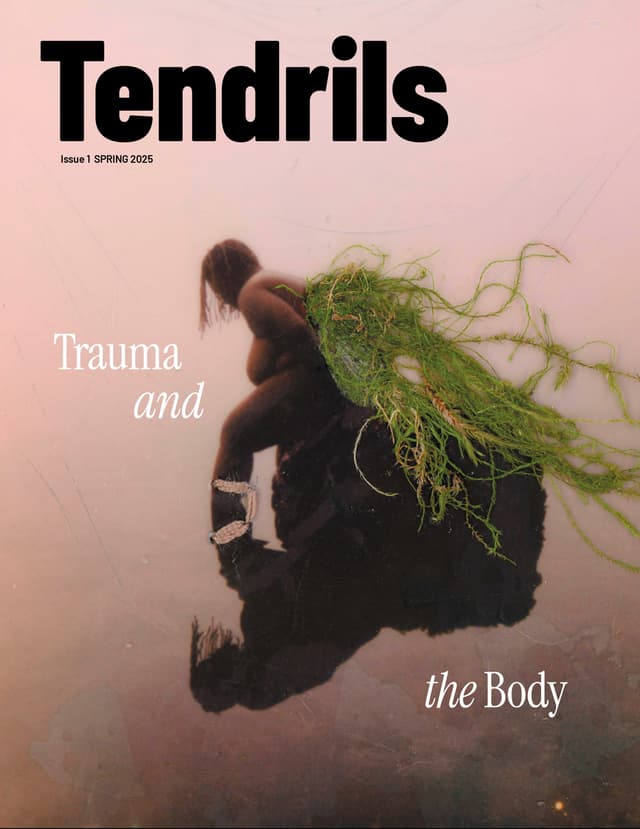
Trauma and the Government, Issue 3
Submissions Open
Tendrils, a trauma-focused art & literary journal, seeks visual art and short-form literature for our upcoming “Trauma and the Government” issue. This edition will explore the profound theme of trauma and the government—how policy, laws, and programs have rippled through communities, neighborhoods, and lives.
The work can reflect historical or contemporary themes related to local, national, or global policies, laws, etc. We’re interested in thoughtful, bold, and distinctive voices that contribute fresh and meaningful perspectives to this topic. We invite artists and writers to submit work that offers a unique perspective, whether abstract, realistic, or something else entirely.
The work submitted can reflect governments from around the world, but we ONLY publish US-based (incl. territories) artists and writers. Each selected artist and writer will be paid a $20 honorarium.
Fee: There is no fee for submission.
Deadline: Dec. 19, 2026
What kind of art can you submit?
Art submissions: any medium or size that explores the themes of trauma and the government.
Literature: Short-form pieces (max. 1000 words) such as poetry, essays, and short stories that focus on the trauma and the government theme. We're open to considering an excerpt if you have a long-form work that aligns.
Deadline: Dec. 19, 2026
Address the theme of “Trauma and the Government”
Only original, human-created works will be considered.
Submitter MUST be 18 years old or older
Submitter MUST live in the US and/or its territories
Artworks can be of any medium or size (if video or performance, please submit a still image AND a link to view the video)
Artist Statement about how the work addresses the theme (between 100 and approximately 300 words)
For art submissions: upload jpg (jpeg) files at 300dpi. The longest side should be no greater than 3500 pixels. Each file must be saved as “FirstnameLastname_Title”
For literature submissions: upload pdf files. Each file must be saved as “FirstnameLastname_Title”
Literature must be short-form (poetry, essay, short story, etc.), OR an excerpt from a long-form text. (max. 1000 words)
Max 2 submissions will be reviewed.
Each selected artist and writer will be paid an honorarium of $20. They will also receive a free printed copy of Tendrils, Trauma and the Government issue.
Selected art and literature will be published in a full-color printed edition. A small number of these works will also be showcased in an online edition on our website, see Issue 2 as an example.
Submit your work here.
Call for Submissions: The Orange Rose

The Orange Rose Literary Magazine
SUBMISSIONS ARE NOW OPEN UNTIL NOVEMBER 7
Send all work to theorangeroselitmag@gmail.com
We accept Fiction, CNF, Flash Fiction, Micro Fiction, Poetry, Art, and Photography.
We ask that you submit to only ONE of the listed genres at a time, and that you wait for a response before submitting again.
You may submit from one of the following:
One fiction or CNF piece (1,001 to 3,000 words)
One flash fiction / CNF piece (401-1,000 words)
Up to three micro fiction / CNF pieces (maximum 400 words)
Up to three poems (each poem should start on its own page)
- All work must have a title, including art and photography
- We are open to any genres, but will automatically reject any work that includes graphic imagery or hateful content.
- No AI-generated texts or art – we prefer pieces created by humans.
- We ask that any photography submitted not include people due to our inability to verify their consent.
- Simultaneous submissions are allowed, but please notify us immediately if your work is accepted elsewhere. We want to congratulate you!
- Please attach submissions as a .doc or .docx file only (or .jpg for images)
- Include a short third-person bio in the cover letter of your submission, along with any social media handles or personal website links.
- Please refrain from telling us about your story in the cover letter – let your stories speak for themselves. The cover letter is for us to learn about you.
- In the email subject line, use the format “SUBMISSION: [Genre]”
- We ask for First North American Serial Rights. All rights revert back to the author after publication. If your work is reprinted elsewhere, we ask that The Orange Rose be acknowledged as the site of first publication
Call for Submissions: Rawhead: Point Blank

Rawhead is an online journal that publishes poetry, fiction, nonfiction, and visual art. We are not a horror publication, though we are interested in work that unsettles through emotional depth, sharp craft, and surprising clarity.
We believe the arts are a form of resistance against monsters, in whatever shape they take. Artists draw their blades. Writers raise their shields. Creators are found at every last stand and keep the truth breathing.
That’s why we need your voice: your witness, your joy and fury, your circle of salt. We need your silence to be broken.
Send us the still dripping pieces of the beast you’ve finally slain. Show us the scars of an ongoing fight. Or throw out the plot entirely and just share something that you believe in.
Submissions to Rawhead: Point Blank and requests for Editorial Feedback are open year-round.
Rawhead: Point Blank
Please Note that Rawhead: Point Blank is a separate project from Rawhead's general issues. Before submitting, we strongly encourage contributors to read the project's purpose and previous features to ensure their work is a good fit. Work that is not selected for Point Blank may still be considered for general issues of Rawhead.
Read Rawhead: Point Blank
Purpose
Point Blank is a Rawhead digital series featuring the work of a single writer or artist, released semi-monthly, in response to what is happening now. We accept Poetry, Visual Art, CNF, Fiction, and Hybrid works for this series. Point Blank exists as a form of resistance and documentation, a way of marking what is being done, who it is being done to, and how it is being fought. This series extends our core mission into the present tense, serving as a rapid-response record for the stories and injustices unfolding right now that cannot afford the distance of traditional publication schedules.
This is a space to name the realities of state violence: from the kidnapping and murder of our neighbors by ICE, to the genocide of the Palestinian people, to the plunder of the earth itself as our forests and oceans are sacrificed to endless greed. It is also a place to witness structural rot of the everyday: the indignity of economic hardship, the legislative attacks on our LGBTQ+ community, and the systemic racism that decides who is protected and who is pushed to the margins. This is a space to call out the corruption that impacts most people’s daily lives. We are meeting that force with a point-blank record of our own.
At the same time, we recognize that resistance is found in the persistence of hope, the labor of community care, and the bravery of everyday heroes. Rawhead: Point Blank is a space for the work that documents what is being built as much as what is being broken. We value stories of the things we create in spite of the powers that be: the mutual aid, the art, the healing & recovery, the defense of neighbors, the unexpected kindness of the world, and the daily ways we choose each other over the systems that despise us. A ledger of the moment is incomplete without the stories of those who insist on beauty and survival in the face of injustice.
We want to hear from anyone paying attention, whether that perspective comes from the shop floor, the classroom, the kitchen table, the picket line, the waiting room, the cell, the back roads, or the street. Rawhead has always been committed to work that does not look away, and this series holds space for these conditions to be named and remembered as they unfold.
Honorarium
Rawhead: Point Blank offers a flat $30 honorarium to each featured contributor and a $10 donation to the charity of their choice. We recognize this is a modest amount, but it is an acknowledgment of your time, your labor, and the value of your voice. We hope to be able to offer more in the future.
Free to Submit
We believe financial reasons should never be a barrier to sharing creative work and are fully committed to always offering free submissions.
We do, however, offer paid submission options in the form of Supporter, Expedited, and Priority response submissions simply to cover operation costs and allow our journal to grow. Expedited submissions will receive a guaranteed response within two weeks and Priority subs will hear from us within 72 business hours.
Rawhead is actively seeking funding to help support operational costs, produce print issues, offer payment to each contributor, and expand our reach. If you'd like to help us reach those goals, please consider selecting a paid submission option or donating to our journal here: Support Rawhead on Ko-fi
Donations are appreciated but do not influence our editorial decisions.
Submission Guidelines
Poetry
Submit 3 to 7 poems in a single document, totaling no more than 15 pages (.doc or .docx preferred). Use 12pt Times New Roman or Arial font. Format one poem per page unless part of a sequence. Indicate stanza breaks if a poem spans multiple pages.
Prose
We accept one to two nonfiction or fiction pieces up to 3,000 words each. For flash or experimental works (under 1,000 words), submit up to three pieces. Use 12pt Times New Roman or Arial font. Double space all prose pieces. Note: If a piece relies on non-standard font and/or spacing, please submit it to the Hybrid category.
Visual Art
Submit 3 to 10 pieces in any medium—illustration, photography, digital collage, mixed media, painting, sculpture, etc. Upload high-quality images (min 1500px, .jpg/.png/.tiff).
Hybrid
We welcome work that crosses or blends forms such as prose/poetry hybrids, lyric essays with embedded images, comics, sound pieces, etc. You may submit one larger hybrid work up to 3,000 words, 5 shorter pieces (provided they total no more than the limits above), or up to 10 images. Please provide a brief description of your mixed-genre piece.
AI Policy
We do not accept AI-generated content. Submissions must be original, human-made, and free of AI assistance.
Simultaneous & Previously Published Work
We accept simultaneous submissions because we believe that powerful work deserves more than a single appearance. Too often, published pieces reach only a limited audience before slipping into obscurity. At Rawhead, we’re committed to giving exceptional writing and art a second life where it can continue to resonate, provoke, and endure. Please ensure that you credit the original publication in your submission note, retain the rights to your previously published work, and wait at least 6 months after its publication before submitting again.
Cover Letters
Include a third-person bio, previous publications (if applicable), and any personal sites or social media handles you’d like us to share.
Submit your work here.
Call for Submissions to Anthology: After the Fire (Ray Bradbury Center)
Inspired by Ray Bradbury, After the Fire (working title) honors the legacy of one of America’s most celebrated speculative fiction writers by inviting a new generation of authors to engage with the spirit and social urgency of Bradbury’s work.
This isn’t a tribute collection or pastiche. We’re inviting contemporary writers to use Bradbury’s legacy as a launching point–to reimagine, reinterpret, and ask new questions of the world we live in now.
We’re looking for stories that grapple with the kinds of big, human questions Bradbury wrote about: censorship, surveillance, climate, otherness, wonder, and what it means to remain human in inhumane systems. But these stories should be firmly rooted in the present, engaging with the issues and possibilities of our own time–from police violence, reproductive justice, and border politics to AI, mutual aid, climate anxiety, speculative kinship, and beyond.
We don’t want you to write like Bradbury. We want to know what you have to say now.
After the Fire is edited by:
Maurice Broaddus – award-winning writer and editor (Sweep of Stars, Pimp my Airship, Dark Faith)
Carrie S. Cooper – Assistant Director of the Ray Bradbury Center and public humanities scholar
IMPORTANT: All submissions must be original fiction. Do not use copyrighted characters, settings, or other material from Ray Bradbury’s stories. No fan fiction.
DETAILS
Genres: Science Fiction, Horror, and Other Speculative Fiction
Length: Up to 5,000 words (firm limit)
Rate: $0.10/word on acceptance
Originality: Original Stories that have never been published in any format
AI: Absolutely no AI-assisted or AI-generated works
Format: All submissions should follow proper manuscript format (modern edition, preferably). Submissions should be emailed to:
Subject Line: Submissions [Title of Piece]
Please attach all submissions in .doc or .docx or rtf format–we will not accept submissions embedded in the body of the email. Include your bio in your email cover letter.
TIMELINE
Submissions open: October 15, 2026
Submissions close: January 31, 2027
Reading/review begins: February 1, 2027
Reading/review closes: March 31, 2027
All authors contacted by: April 30, 2027
Tuesday, October 27, 2026
Delayed Updates
My apologies for the delayed updates! We have a crew of workmen in our home, and our power has been on and off. With so many people here, I couldn't leave to find a place to update my posts. Things are calming down some, so I should have lots of new writing opportunities posted in the next couple of days.
Hang in there! And thanks for understanding.
Jeanne
Monday, October 19, 2026
Call for Submissions: Only Poems
GENERAL GUIDELINES
These guidelines are not specific to any one category (you’ll find those below), but overall submission guidelines for what we expect from the work we receive. Please ensure that you follow these when submitting to any of our open categories.
We only accept previously uncurated work. This means that yes — you can submit poems that have previously appeared across social media, blog posts, Discord channels, scribbled on your foggy bathroom mirror, etc. But if a poem has been published in a magazine or anthology edited by someone who’s not your mom, then no, it's not eligible. (We run a special category on ONLY POEMS DAILY for previously published poems — it's called Best New Poems.)
We love cover letters and enjoy getting to learn more about you. You're welcome to share publication history, if any, however it does not influence our decision. Though please make sure that the document of your poems is stripped of any biographical information—use the cover note field for this.
We encourage simultaneous submissions. Feel free to submit your work to all the wonderful places you think will be a good home for your poems. Except for the Leonard Cohen Poetry Prize, we do not require you to withdraw your poems should they find a home elsewhere — if we like your work, we'll find a way to work with you.
We nominate for the Pushcart Prize, Best of the Net, Best New Poets, Best Spiritual Poetry, Monarch Queer, and Nina Riggs Poetry Awards.
PUBLISHING ETHOS
We publish poets (as opposed to just poems). We like to spend time with your voice and see your range.
We welcome poets from all over the world.
We love prose poems, traditional forms (ghazals, villanelles, sestinas, etc), love poems, sex poems, speculative poems, and all sorts of experimentations, but we are not married to a style or genre.
Send us your most exciting work. We want poems that make us go: “God, I wish I had written this!”
Short Poems
What
This category is part of ONLY POEMS DAILY, where we publish one short poem every month.
Send us
You may submit only one poem.
When
Submission Period: March 15 - March 31 & October 15 - October 31
Payment
We pay $22 for this contribution. While the submissions for the Short Poem category are free, there are also tip-jar options and paid editorial feedback options. These help us sustain the magazine.
Response
We generally respond to all submissions within 3 months.
Essays
What
We are always looking for stirring and beautiful essays of all styles. You’ll find specific themed and unthemed categories on our submission portal.
Send us
You may submit one piece in any open nonfiction category.
When
Submission Period: Always Open
Payment
We pay $50 for this contribution.
Response
We generally respond to all submissions within 3-4 months.
Book Reviews
What
We are open to reviews of new poetry collections as well as older ones that might have slipped past the radar back in their day! Flash Reviews are under 300 words & Long Reviews can be as long as your heart desires.
Send us
You may submit one book review at a time.
When
Submission Period: Always Open
Payment
At this time, we're unable to offer payment for book reviews.
Response
We generally respond to all submissions within 3 months.
Book Lists
What
We love reading book recommendations. Before submitting, please take a look at what we’ve recently published so your selections don’t overlap too much with previous lists.
Send us
You may submit one book list at a time.
When
Submission Period: Always Open
Payment
At this time, we're unable to offer payment for book lists.
Response
We generally respond to all submissions within 6 weeks.
Submit your work here.
Call for Submissions: Variant Literature

To be considered for our Winter 2027 issue please submit between October 10th and November 20th 2026.
General
- Please submit only once per submission period unless otherwise invited.
- We do not accept e-mail submissions; all work must be submitted through Submittable.
- Please send all work in one file.
- We aim to respond to your work within two months; our average response time is closer to one month.
- Simultaneous submissions are fine, but please notify us immediately if your work is accepted elsewhere.
- We do not accept previously published works.
- We do not accept any AI-assisted or AI-generated work.
Poetry
- Limit your submission to 5 poems totaling no more than 10 pages.
Flash Prose or Micro Series
— 750 to 1200 words Submit one piece of flash prose, 750–1,200 words, or a connected series of exactly three micros, 250–400 words each.
We welcome literary fiction, speculative fiction, and nonfiction in this category.
Literary Fiction
— 1200 to 5500 words Submit one literary fiction piece of 1,200–5,500 words.
Speculative Fiction
— 1200 to 5500 words Submit one speculative fiction piece of 1,200–5,500 words.
What happened to the nonfiction genre?
We are not looking for longer nonfiction. If your nonfiction is 750–1,200 words, submit it to the Flash Prose genre.
Payment
We pay $15 per accepted poem, flash piece, or micro series.
We pay $25 per accepted longform story.
We pay through PayPal.
Tips Tip jar offerings go to support payment and promotion of writers. All editors at Variant Lit are volunteers.
We appreciate your support!
Call for Submissions on Theme of "City": WayWords

Issue 25: City
Editors' advice:
Bright lights, people, and entertainment—cities are full of life, and everything that includes.
Deadline: Nov. 20, 2026
Submissions Guidelines
Submissions must be in English. Send each piece in a separate file.
Limits:
up to 5,000 words of fiction
two poems up to 15 lines each
Formatting
No identifying info inside your file
Include your piece title at top of your doc
If previously published, include credit below your title
TNR or Arial, 10/12, single spaced
Indent paragraphs
Empty margins on all sides
Empty line for scene breaks
How To Submit
File name: Piece Title - WayWords
Each piece in a separate file
Submissions accepted by email:
submissions [at] writersworkout.net (Change [at] to @ )
or Duosuma
Include your piece title and WayWords in your subject
Include your name/pseudonym and short bio in the body of your email
Attach your file in .doc/x or .odt OR paste the live, unlocked link to your GDoc or Word file
We must be able to download your file. We will not request access and we are not responsible for locked files.
You can find these settings on the Submissions page.
Call for Submissions on Theme of: "Burning the Candle at Both Ends": Hot Flash Literary

We are open for submissions for Issue 5 from October 1 through November 12, 2026.
Issue 5 theme: Burning the candle at both ends
Please follow the submissions guidelines listed below.
Hot Flash Literary accepts previously unpublished flash, both fiction and creative nonfiction, including prose poetry (no lined poetry!), from writers who identify as women. Writers can submit up to three (3) pieces at one time. Each individual piece must be fewer than 500 words.
No reprints.
Human-generated content only (no AI).
To submit, send up to three (3) pieces pasted into the body of an email. We won’t open attachments. Email us at:
hotflasheditor@gmail.com
The subject of the email should include the word “submission” and your name. Example: Submission—Jane Smith.
Please include a 40-word (maximum) bio written in third person.
Simultaneous submissions are fine, but please let us know promptly if accepted elsewhere.
We will not publish pieces that are hateful or bigoted.
Call for Submissions: IHRAM Press
IHRAM Press provide the platform for creative activists at risk to speak up about urgent social-justice issues in their environments, providing readers with their unique perspectives on issues of human rights.
IHRAM Press pays $50 per accepted written piece and $25 per accepted artist.
Magazine edition Quarter Two 2027: Indigenous Voices and Cultural Myths for Resistance
Submissions open from October 1st - December 1st 2026.
Our editorial team will begin reviewing submissions on October 1st.
WHAT ARE WE SEEKING TO DO?
We are seeking firsthand experiences from original thinkers and land stewards, factual retellings, and personal reflections that shaped the writer’s adulthood, valuing the native voice and Indigenous history. This magazine will also explore the relationship between spirituality, myth, dreams, memory, culture, identity, resistance, and Indigenous voices. We welcome submissions from writers around the world, regardless of gender or identity.
We are particularly interested in how creativity becomes a form of resistance and generational memory. How can storytelling preserve what has been suppressed? How do myths and inherited stories reflect the way we understand ourselves and the world? What does it mean to reclaim a tradition, history, or narrative that has been marginalised or erased?
We encourage writers to approach these questions through their own lived experiences and perspectives.
We especially welcome submissions from Indigenous writers and communities whose histories, traditions, or cultural identities have experienced marginalisation, suppression, or erasure. We also welcome anyone with a meaningful personal connection to the themes of myth, cultural memory, storytelling, identity, and resistance.
WHAT ARE WE LOOKING TO PUBLISH (AND NOT LIMITED TO):
- Indigenous communities and cultural traditions
- Traditions that have been suppressed or threatened with erasure
- Myths, histories, and ideologies that have been marginalised or erased
- Cultural identity and its preservation through art and literature
- Myths and stories that form the basis of traditions, beliefs, and worldviews
- How myths shape cultural identity and collective memory
- The influence of myths on contemporary perceptions
- Oral traditions and the transmission of cultural knowledge
- Storytelling, art, and literature as forms of resistance and reclamation
- The loss, preservation, or rediscovery of cultural stories
IMPORTANT SUBMISSION REQUIREMENTS:
Poetry: you can submit up to FIVE poems in one submission. We will not accept different emails with multiple submissions.
Short-stories / Essays: prose writing should not exceed 2,500 words. You can submit up to TWO prose pieces in one submission. We will not different accept emails with multiple submissions.
Visual Art: Accepted Visual Art includes: mixed media, acrylics, oil paintings, drawings, photographs, collages, sculptures, or any forms that fit our publication’s themes. Please note, your published artwork might be presented in black-and-white and therefore should be suitable for “print”. We WILL NOT accept any AI-Generated art. Ensure your artwork is submitted as .JPG, .PDFs, or .PNGs.
Please note: if your piece is accepted, we will request a high-resolution author photograph. However, authors are not required to provide photographs of themselves and are always welcome to decline, should they wish to remain anonymous.
Compensation for Accepted Submission:
Writers whose submissions are accepted will receive payment of $50.
Accepted artists will receive $25.
Please send your FULL submission to:
submit@humanrightsartmovement.org
Your submission should include the following supplemental information:
Your full name / pen name
Your country of residence
The type of submission: whether you are sending us poetry, short-stories, personal essays, and/or visual art, etc.
Your poetry and/or prose submission should be sent as WORD DOCUMENTS or PDF files, and your visual art as PNGs/JPEGs/PDFs.
An author / artist bio: a brief third-person bio (roughly 100 words). If your bio includes references of your past work, feel free to provide links!
A foreword: a brief foreword to your piece (between 300-500 words), explaining your inspiration for creating it, background information, explanation of key characters, and any other key insight for the reader.
AI Declaration: Please confirm that your writing and application have not been written, assisted, or edited. If our team suspects that you have used AI in your writing or application, it will result in an immediate rejection.
A declaration that your work has not been previously published elsewhere.
Please note that: incomplete submissions that do not include the required supplemental information will not be considered.
Call for Submissions: Lake Effect
Manuscripts submitted to Lake Effect must be original typescript or clear photocopies, and must be accompanied by a SASE with sufficient postage or they will not be returned. Internet submissions are not accepted. Simultaneous submissions are accepted, but please notify the appropriate editor should the manuscript, in whole or in part, be accepted elsewhere. Stories, poems, and essays will generally be returned or accepted within four months of their receipt (possibly longer over the summer).
Currently, contributing writers receive two complimentary copies of the issue their work appears in as payment. All rights revert to the author upon publication. Lake Effect does not consider work that has previously appeared elsewhere.
Correspondence (but not submissions) may be emailed to the appropriate editor through the staff page.
Submissions (with SASE) and other correspondence should be sent to the editors at:
Lake Effect
School of Humanities & Social Sciences
Penn State Erie, The Behrend College
4951 College Drive
Erie, PA 16563-1501
We also accept ONLINE SUBMISSIONS.
Fiction: Lake Effect is looking for stories that emerge from character and language as much as from plot. Lake Effect does not, in general, publish genre fiction, but literary fiction. For stories of longer than fifteen pages or so, query first. Lake Effect seeks work from both established and new and emerging writers.
Poetry: Lake Effect is looking for poems that demonstrate an original voice and that use multi-layered, evocative images presented in a language shaped by an awareness of how words sound and mean. Each line should help to carry the poem. There is no length limit per poem, but send no more than four poems at a time. Lake Effect seeks poems from both established poets and from new and emerging voices.
Creative Nonfiction: Lake Effect is looking for well-crafted and lively literary or personal essays. We are not looking for literary criticism, but essays that engage literature in the context of a lived life are certainly welcome. If your essay is longer than fifteen pages or so, please query first. Lake Effect seeks essays from both established and new and emerging voices.
Sample copies may be ordered. Refer to the ordering page.
Writing Competition: River Teeth Literary Nonfiction Book Prize
River Teeth‘s editors conduct a yearly national contest for a book-length manuscript of literary nonfiction in English. All manuscripts are screened by the co-editors of River Teeth. The contest winner receives $1,000 and publication by The University of New Mexico Press.
Entries must be submitted online through Submittable.
Online submission fee is $27.
Deadline for Submissions: October 31
Final Judge: Sue William Silverman
Complete Guidelines:
- Entries must be submitted online through Submittable. Manuscripts must be in English, double-spaced, and between 35K-85K words long (approximately 150-350 pages).
- The winner will receive book publication with The University of New Mexico Press and a $1,000 honorarium.
- The reading fee is $27 (which includes a one-year subscription to River Teeth to begin in the spring). While our contest is open to entries outside of the U.S., we cannot offer free subscriptions to international submissions because of high mailing rates.
- The deadline for submissions is October 31. The contest winner and finalists will be announced by April.
- Submissions should be previously unpublished as a complete book; if excerpts or individual essays have appeared in literary journals or magazines, that is acceptable. Any literary nonfiction (including memoir, personal essays, investigative reporting, et cetera) is eligible.
- Simultaneous submissions are fine, but as ever, be sure to withdraw your manuscript immediately if it is accepted elsewhere for publication before the conclusion of the contest.
- The editors make every effort to screen manuscripts without bias of identifying author details; however, because the contest is nonfiction, it is not always possible to eliminate identifying characteristics about the author from the manuscript. Do not include your name on the title page or in the header or footer of the manuscript, but otherwise do not fret too much over anonymity. Please include a brief bio in the cover letter section of Submittable.
- River Teeth encourages underrepresented voices to submit their work for consideration, including but not limited to: BIPOC, LGBTQ+, and disabled writers.
- Close friends, family members, and former students of the judge may not submit during the year of the judge’s service. (Writers who have had short-term interactions with the judge at residencies, conferences, or fellowships do not count as students.) Current Ball State University faculty and students (including interns) are ineligible.
- Please direct all questions to:
Writing Competition: Patricia Dobler Poetry Award
Contest rules
The award is open to women writers over the age of 40 who: Are U.S. citizens or permanent residents, currently living in the U.S.
Have not published a full-length book of poetry (chapbooks and self-published poetry books of any length excluded)
Poems must be unpublished, up to 75 lines or fewer per poem; up to two poems, of any style, per submission.
The winner receives:
The Dobler Award (valued at $2,000) in the form of $1,000
Round-trip travel, lodging & reading at Carlow University in Pittsburgh with the final judge
Publication of the winning poem in Voices from the Attic
A copy of Voices from the Attic
view past winners
Current Carlow students or employees are not eligible.
Submission deadline: Saturday, October 31, 2026, 11:59 p.m. Eastern Time
Submission email:
Submission fee: $20 for each 2-poem entry
Judge: Lauren Shapiro
More information here.
Sunday, October 11, 2026
Call for Submissions: riverSedge

Since 1977, riverSedge has published the very best art and literature from the South Texas region and beyond. Past artists and authors Rolando Hinojosa, Angela de Hoyos, Alurista, Naomi Shihab Nye, Sandra Cisneros, and Denise Duhamel.
riverSedge is published annually and is now an online-only format, beginning with the 2020 issue . Electronic submissions only. If your work appears in our latest issue, please wait a year before submitting again. We welcome and are excited to read interesting, bold, well-crafted writing. We encourage submissions from writers who belong to historically marginalized groups.
riverSedge General Submission Guidelines:
- Submissions are open October 1, 2026 to March 1, 2027.
- $3 submission fee for all genres.
- 2 prizes of $350 will be awarded in poetry and prose. All entries, excluding reviews, interviews, and graphic literature, are eligible for contest prizes.
- Multiple submissions welcome in all genres. However, each submission should be uploaded as a separate entry. In other words, one story/essay/comic/script per $3 entry fee. For poetry, up to five poems per entry. For specific guidelines, visit the categories below.
- Previously unpublished work only. Self-published written work (in print and/or on the web) is not eligible.
- Simultaneous submissions are welcome. If your work is accepted elsewhere, please withdraw your submission as soon as possible in its entirety or send us a message if it's only a specific poem.
- Submissions welcome in English, Spanish and anything in between.
- Our terms: we require First North American Serial Rights for all accepted work and non-exclusive print rights indefinitely for potential anthologies and promotional materials. Additionally, we require non-exclusive electronic rights indefinitely so we may include accepted works in potential online archives.
Current staff, faculty, and students of the University of Texas Rio Grande Valley or South Texas College cannot submit original work to riverSedge.
Submit your work here.
Call for Submissions: Plott Hound Magazine

General Guidelines
Policy on AI-generated submissions:
Plott Hound Magazine will NOT accept or publish submissions of any kind that were written, generated, or assisted by AI tools in any way, such as ChatGPT. This magazine full of stories on animals wants 100% human effort and creativity. Prohibiting involvement of AI extends to all and any art featured for the magazine. If your piece is found at any point in the publication process to have AI use, you will be banned from future submissions to Plott Hound. If your piece is found after publication to have AI use, it will be removed from the issue and the website, and you will be banned from future submissions to Plott Hound.
What We’re Looking For:
-Stories with anthropomorphized animals as viewpoint characters and protagonists
-Animal-centric speculative fiction (fantasy, science fiction, horror)
-Underrepresented voices (BIPOC, LGBTQIA+, disabled, neurodivergent) that engage with animal myths, tales, and futures
-Stories with uncommonly written about animals as protagonists
-Stories that dig deep into the senses and experience of animals
-Stories that explore the cultures and societies of animals, not just cultures and societies with animals. Think of rabbit language and warren infrastructure in Watership Down, or the clans and warrior code of feral cats in Warriors.
What We Don’t Want:
-Stories with human viewpoint characters or protagonists
-Stories under or over the word limit
-Stories that contain no speculative element (no fantasy, sci-fi, and/or horror)
-Stories of simply animals doing animal things (which closely ties in with lack of speculative element)
-Stories with animals reduced to silly cute sidekicks, props, punchlines, or the butt of jokes
-“Zipperback fiction” where the “animals” are either human characters obviously and clumsily rewritten to be animals, or if the animals were human, the change would hardly impact the story
-Stories for children or middle grade
-AI-generated works
-Glorifying violence toward and abuse of women, children, animals
-Glorifying homophobia, transphobia, racism, sexism, ableism
-Gratuitous violence, sex, and erotica
-Positive depictions of pedophilia and bestiality
-Payment: Paypal is highly preferred, though we can discuss alternative methods of payment upon acceptance.
–Note to past contributors: contributors must wait at least ONE submission period/quarter from the issue they were published in before they can submit to another open period. This also applies to poetry submissions.
List of common species and tropes:
This is not a list to say that writing about these species and tropes is prohibited, only that because we get so many submissions on them, they will have to work a lot harder to stand out: dogs, cats, dragons, corvids like ravens and crows, witches’ familiars, subjects of intelligence experiments.
Other submission don’ts:
-unsolicited resubmissions of the same story (even if it’s revised. If you did not get a request to revise & resubmit (an R&R), no is no.)
-including pictures and photos in submissions, which must be text only
-submitting the wrong file (which would result in “file error” on Moksha)
-replying to rejections or disputing/arguing with rejections
-submitting plagiarized work
Cover letter do’s and don’ts:
-Include author name, name of submission, word count, best 2-3 publishing credits (if applicable, we don’t want an entire resume)
-Include any personal or educational experience pertinent to the story. (For example, if you are a marine biologist and your story features marine animals, do mention that!)
-Inclusion of content warnings is optional, but appreciated.
-Please keep the cover letter polite and concise. Author bio is only needed upon acceptance of the piece.
-Do not summarize your story in the cover letter. Let the submission speak for itself.
-The cover letter is a brief introduction; it has no weight in the decision to accept or reject. The decision rests solely on the merit and strength of a piece.
Contact:
For submission queries and submission-related questions, please direct them to:
editor@plotthoundmag.com
PROSE Submission Guidelines
-Word limit for original short fiction:
1000 (minimum) – 5000 words (maximum)
sweet spot/preferred: 3000 – 4000 words
-Maximum word limit for original flash fiction: 999 words
-Pay rate: 8 cents/word USD
-Format: Standard Manuscript Format. 12 point Times New Roman, double spaced, .doc or .docx files. Mailing address and phone number are not required on the header.
-Simultaneous submissions are allowed! Just make sure to give us a howl if your submission has been accepted elsewhere before we make a decision on it.
-Multiple submissions: you may submit one piece per category at a given time.
-If a submission is declined and the submission period is still open, you may send another. Currently there is no cooldown period between submissions during an open submission window.
-Translations to English: allowed, welcomed, and encouraged! They must be original short fiction or flash within the corresponding word limits. In the cover letter, please state that the work is translated into English from (original language), and include names of the original author and translator. Do not submit unauthorized translations without knowledge or consent from the original author.
-Cover letter for translations: if you are the translator, please include a letter from the original rights holder confirming that translation rights are available for purchase.
–Plott Hound Magazine welcomes and encourages submissions from writers of all races, religion (creed), gender expression, sexual orientation, age, ancestry, disability, marital status, and military status.
-Stories should be submitted through Moksha (see the Submit page). The link to Moksha will not be provided when submissions are closed. Do not submit through email or postal service.
-Post submission process: Plott Hound Magazine uses a tiered system of editors and readers to make decisions on short story and flash fiction submissions. All prose submissions will undergo initial review by first readers. If a first reader decides that a submission is worth further consideration, you will receive a hold notice through Moksha, and the submission is passed up to the editor in-chief, who will then make the final decision to reject or accept for publication.
REPRINT (“Retold Tails”) Submission Guidelines
-Payment: $100 USD flat rate for short fiction (up to 10,000 words), $20 USD flat rate for flash fiction (up to 999 words)
-In the cover letter, please include the name of publication that had originally published your piece. Also, please double check your original contract that you are eligible to submit your piece as a reprint. A decision on a reprint submission cannot be given without these two pieces of crucial information.
-Reprint submissions are sent through Moksha, as are original submissions.
-Do NOT submit an original submission previously rejected by us (AND not previously accepted/published elsewhere) as a reprint. It will be automatically rejected.
-You may submit a reprint as well as an original submission in a given open period.
-One reprint submission at a given time: either one short fiction or one flash fiction, not both at the same time.
-Reprints are considered based on fit with original pieces in a given issue. As such, originals are given first priority, and final decisions for reprint submissions will be given after final decisions on original submissions.
POETRY Submission Guidelines
Plott Hound publishes 1-3 poems per issue. We’d love to see animal-centric speculative poems in all forms, from free verse to a sonnet to a canto in terza rima.
-Send 1-5 poems/up to 5 pages in a single document.
-Maximum submission length: please send no more than 5 pages (i.e. if you have a single 5-page poem, please send only one poem).
-Format: 12 pt serif font (Courier, Times), single space. See Shunn’s poetry manuscript format.
-Pay rate: $50 USD
-Reprints, simultaneous submissions, and other logistics: see Prose Submission Guidelines above
NONFICTION ESSAY Submission Guidelines
Plott Hound aims to publish one essay per issue. Animals hold a special place in our hearts and within the communities and cultures we belong to. We would like you to share that significance and impact. Do you have a particular connection to an animal through a scholarly or spiritual background? We invite you to impart that knowledge as well. You can write about one particular animal or many. We will accept pitches through Moksha. Upon acceptance of that pitch, a fully written article may be submitted. You may send a previously declined pitch to the next open submission period.
-Pay rate: $100 USD
-Word range: 1000 – 2500 words
Frequently Asked Questions (FAQ):
-Do animal characters have to be from real life?
No, not at all! Show us stories with animals real and imagined. Give us the magical and fantastical creatures from myth and folklore, like dragons, werewolves, and unicorns. You can even have fictional species of your own creation! The animal world is one of staggering diversity. We want stories that acknowledge and celebrate this.
-Can human characters be in the story?
Yes, human characters can be included (as many or as little as you want), but the protagonist and focus of the story must be an animal.
-What about alien characters?
Alien protagonists are allowed as long as they’re recognizably bestial/creature-esque and not too humanoid. Think Star Wars Dugs, Ewoks, and Geonosians, not Twi’leks and Togrutis or Vulcans from Star Trek.
-What about shapeshifters?
Shapeshifters constantly, precariously teeter on that liminal boundary between man and beast. With that in mind, if your story has shapeshifters as the focus and protagonist choice, show us that inner beast roiling beneath the human skin. If the shapeshifter character(s) are too human, it’s likely not a good fit for the magazine.
-Do fungi count as animals?
Unfortunately they do not, as fungi occupy a kingdom of life that is neither plant nor animal. Perhaps they can occupy a special issue of their own…But for general submissions and the time being, no fungi stories.
-What if my story has a protagonist that’s a fusion/chimera of plant and animal, or fungi and animal?
Fusions and chimeras are fair game! It would have to be a pass, however, if the protagonist has strictly the characteristics of a plant or fungi.
-Do you give feedback to submissions?
At the second round level, perhaps. If the rejection comes from the first readers, no. Given the high volume of submissions we receive, there is simply not enough time and energy to leave individualized feedback.
-Can I submit film or TV scripts?
No, we do not accept scripts.
-Can I submit the excerpt of a novelette, novella, novel, etc.? Even if it fits under the 5000 word limit?
No. Stories submitted to Plott Hound Magazine must be standalone, completed short fiction or flash fiction. We are not a market for novelettes, novellas or novels.
Examples of works that fit Plott Hound’s vision and aesthetic:
–Watership Down and Plague Dogs by Richard Adams
–Warriors series by Erin Hunter
–The Sight and Fire Bringer by David Clement-Davies
–Beastars by Paru Itagaki
-“Jackalope Wives” by Ursula Vernon (Apex)
-”The Bookmaking Habits of Select Species” by Ken Liu (Lightspeed)
-“The Starship and the Temple Cat” by Yoon Ha Lee (Beneath Ceaseless Skies)
-“Swarm X1048 – Ethological Field Report: Canis Lupus Familiaris, ‘6’” by F.E. Choe (Clarkesworld)
-“The Tale of the Three Beautiful Raptor Sisters, and the Prince Who Was Made of Meat” by Brooke Bolander (Uncanny)
-“By The Mother’s Trunk” by Lisa Bradley (Fireside Fiction)
Call for Submissions: MudRoom

MudRoom is open for submissions through November 25! Read our submission guidelines below.
General Guidelines
All issue contributors are paid 15 dollars! Submissions are free, and we try to respond to everyone within each reading period. If you don’t hear from us, feel free to query after three months.
Simultaneous submissions are encouraged. If your work is accepted elsewhere, we just ask that you let us know immediately through email. We will not consider work with sexist, racist, homophobic, xenophobic, or ableist content. Your name should appear on your cover letter but not in the submission. Please only submit once per submission period.
All contributors are paid through Paypal. Please alert us in your submission if you require another method of payment.
POETRY GUIDELINES
MudRoom publishes poetry of all types. You can email poetry submissions to:
mud.room.submissions@gmail.com
To submit, please send 3-5 original, previously unpublished poems in a single .DOC/.DOCX .ODT or PDF file with one poem per page (eight pages maximum).
Indicate POETRY SUBMISSION in your subject line. Submissions without "Poetry Submission" in the subject line will be deleted. You may also include a brief cover letter/third-person bio in the body of your email.
PROSE GUIDELINES
Mudroom publishes fiction, essays, and essays in translation. You can email prose submissions to:
mud.room.submissions@gmail.com
To submit, please send a previously unpublished work no longer than 6,000 words in double spaced 12-point Times New Roman font. All works should be attached in a single .DOC/.DOCX .ODT or PDF file
Please indicate PROSE SUBMISSION in your subject line. Submissions without "Prose Submission" in the subject line will be deleted. You may also include a brief cover letter/third-person bio in the body of your email
Cover Art GUIDELINES
Some issues of MudRoom are accompanied by cover artwork. You can email submissions to:
mud.room.submissions@gmail.com
For consideration of cover art, MudRoom accepts all mediums of artwork with the exception of AI-generated art, visual poetry, or reproductions of already licensed work. We are looking for art that reflects the energy of MudRoom. Feel free to look through our previous issues, reviews, and interviews to get a sense of MudRoom’s character before submitting.
Please submit up to 3 individual art pieces, including a high-resolution image of your artwork with your submission. If you are submitting photographs of your artwork (ex: ceramics, fiber arts, paintings), please consider lighting, angles, and framing of your art to best reflect the formatting of the magazine's digital publication. If you are submitting in multiple genres, please send your submissions in separate emails.
Whenever possible, art files should be titled with your last name and the name of the work to avoid confusion. (example: instead of: last_name_527.jpeg” manually name the file LastName_Title.jpeg). All art submissions should be JPGs, JPEGs, or PNGs.
In your submission, please include the following:
Your/Artist Name
Title of work
Medium
If you wish, you may also include a brief statement about your work.
Please note that accepted submissions may be modified to suit the cover layout and design.
Rights
We require First North American Serial Rights. Following publication, all rights revert to the author, but we ask that MudRoom is credited in subsequent reprints. In addition, we reserve the right to edit submissions in accordance with the rules of our style guide.
Call for Submissions: Banshee Press
Submissions are open from 1–31 October 2026 for issue 23 (spring/summer 2027).
Submission Guidelines
Banshee welcomes submissions from both Irish and international writers of any background, including first-time writers. We welcome work from members of groups or communities typically under-represented within literature, whether or not the work addresses this.
All submissions should be previously unpublished.
Our guideline maximum word count for stories and essays is 5000 words. Flash fiction should be under 1000 words, poems no more than 40 lines.
We are happy to read: one story or one essay or two flashes or up to four poems. Please submit in one category only.
Submissions should be in one .doc or .docx attachment. Prose submissions should be double-spaced.
Please include a third-person biography (max 50 words) in the body of your email. If you are sending a prose submission, please note the word count of the piece in the body of the email.
Email to:
subs dot bansheelit at gmail dot com (Change dot to . and at to @ .)
indicating the category of your submission in the subject line (e.g. Flash/Story/Essay/Poetry).
We are happy to consider simultaneous submissions, but ask that you notify us as soon as your work is accepted elsewhere.
Please note that we cannot offer feedback on unsuccessful submissions.
We believe in paying writers. We can offer contributors a small fee as well as a copy of the journal.
Copyright of the work remains with the writers.
Banshee Press is currently funded by the Arts Council and commits to upholding its Paying the Artist policy.
For contributions to Banshee literary journal, we pay: €350 for a story/essay; €120 for flash fiction; €90 per poem.
Banshee Press authors receive advances in the range of €1000–€5000. We hope to increase these rates with future publications.
For events, we cover the cost of travel where the writer is travelling outside their county of residence. We also cover accommodation where the length of travel involved and/or the start time of the event necessitates it.
We are committed to paying artists within 14 days of work being delivered.
We ensure that writers’ copyright is respected, both in terms of moral and economic rights.
We believe in the importance of transparency on matters of pay and working conditions, and that sharing this information publicly is to the benefit of all writers.
Writing Competition: Discover New Art Prize for Poetry and Prose
Discover New Art Prize for Poetry and Prose
Two $25K prizes—one in poetry, one in prose—awarded to exceptional manuscripts-in-progress poised to become significant books. Five finalists in each category also receive $1K awards.
What to submit:
Submit up to fifteen pages of your manuscript for poetry or twenty-five pages for prose.
Submitters whose manuscripts are selected for the second round of review will be asked to submit a personal statement (no more than two pages, double-spaced) detailing how the award will support the completion and eventual publication of the work.
The winners will be selected by a panel of judges for each genre. Each of our judges will provide a statement on the merits of the winning work.
Eligibility:
This award is open to writers who have not published or are not contracted to publish a single-author work of creative poetry or prose with a Big Five publisher (or their imprints) between January 31, 2017 and January 31, 2027.
Guidelines:
- Submissions will be open from October 1, 2026 - January 31, 2027.
- The early-bird submission fee is $30 (October 1, 2026 - November 30, 2026).
- The regular deadline submission fee is $35 (December 1, 2026 - January 31, 2027).
- Writers from historically marginalized or underrepresented groups are invited to submit for free until we reach fifty submissions in this category. NOTE: We've reached our submission cap.
- Submissions must be primarily in English.
- Submissions may be excerpts of novels, memoirs, book-length essays or poems, or collections of poetry or short stories.
- Multiple and simultaneous submissions are allowed, but each submission must be accompanied by a submission fee.
- If your manuscript is accepted for publication, or you opt to self-publish before the results are announced, you must withdraw your submission from consideration.
- Submissions must be from manuscripts not published in full. The submitted excerpt (individual chapters, essays, stories, or poems) may be previously published, provided the entire manuscript has not been.
- The panel of judges reviews anonymously—please do not include identifying information on your manuscript.
- No translations, unless translating your own work. Original and translation must both be unpublished.
- AI-generated or AI-assisted submissions are automatically disqualified. This includes using AI (ChatGPT, Claude, Gemini, or other similar LLMs) to translate your own work.
- Friends, family, and associates of the judge panel are not eligible for this award.
- If you submit to the wrong genre, feel free to email us, but don’t worry about editing your submission. We’ll take care of it.
The Judges—Meet the Panel
The winning manuscripts in each category will be chosen by these distinguished poetry and prose judges.
Poetry
Kaveh Akbar's poems appear in the New Yorker, the New York Times, the Paris Review, Best American Poetry, and elsewhere. He is the author of the poetry collections Pilgrim Bell and Calling a Wolf a Wolf, and editor of The Penguin Book of Spiritual Verse. His first novel, Martyr! (2024), was a New York Times bestseller, a National Book Award finalist, and winner of the Brooklyn Public Library Book Prize for Fiction.
Carl Phillips's latest book of poems is Scattered Snows, to the North (2024). His Then the War: And Selected Poems 2007–2020 won the 2023 Pulitzer Prize. Other honors include the Jackson Poetry Prize, the Kingsley Tufts Poetry Award, the LA Times Book Award, and fellowships from the Guggenheim Foundation, the Academy of American Poets, and the Library of Congress. He lives on Cape Cod, in Massachusetts.
Aimee Nezhukumatathil is the New York Times-bestselling author of two illustrated collections of essays, Bite by Bite and World of Wonders. Her honors include fellowships from the National Endowment for the Arts and the Guggenheim Foundation. A professor for over twenty-five years, she serves as a firefly guide for the Mississippi State Parks. Her newest poetry book is Night Owl (Ecco).
Prose
Lauren Groff is the author of eight books, including the National Book Award finalists Fates and Furies, Florida, and Matrix. She lives in Gainesville, Florida, where she and her husband own the independent bookstore The Lynx.
Rebecca Makkai is the author of the New York Times bestselling I Have Some Questions For You as well as four other works of fiction. Her last novel, The Great Believers—one of the New York Times’s Best Books of the 21st Century—was a finalist for both the 2019 Pulitzer Prize and the 2018 National Book Award, and won the ALA Carnegie Medal and the LA Times Book Prize, among other honors. A 2022 Guggenheim Fellow, she teaches graduate fiction writing at Middlebury College, Northwestern University, and the Bennington Writing Seminars, and is Artistic Director of StoryStudio Chicago.
Roxane Gay is a contributing opinion writer for The New York Times and the author of Ayiti, An Untamed State, the New York Times-bestselling Bad Feminist, the nationally bestselling Difficult Women, and the New York Times-bestselling Hunger, as well as World of Wakanda for Marvel. Her writing appears in Best American Short Stories, Best American Mystery Stories, McSweeney's, Tin House, Oxford American, Virginia Quarterly Review, and many others. She also writes the newsletter The Audacity.
Submission Timeline—Key dates:
October 1, 2026–Submissions open
November 30, 2026–Early-bird deadline
January 31, 2027–Final deadline
About Discover New Art
Discover New Art is a literary organization devoted to uplifting the craft and careers of literary writers.
Since 2011, we have published contemporary writing and created opportunities for writers through publication, contests, prizes, and other forms of recognition.
Across our platforms, we offer always-open, always-free submissions alongside competitive prizes judged by accomplished writers and literary professionals.
Our magazines are distinct publications, each with their own editorial identity, aesthetic, and literary focus, connected by a shared commitment to strong writing, thoughtful editorial practice, and meaningful opportunities for writers. Together, they allow Discover New Art to publish a broad range of literary work while preserving the particular character of each magazine.
At the center of Discover New Art is a commitment to both the work and the writer: to publishing literature we believe in, supporting the development of literary craft, and creating opportunities that can contribute to a writer’s career over time.
Submissions must be made through Submittable.
Please contact:
blake@discovernewart.com
with any questions about the Prize.
By submitting to the Discover New Art Prize for Poetry and Prose, submitters agree to receive correspondence about future publications and submission opportunities from Discover New Art and associated magazines. You can easily unsubscribe at any time.
Submit your entry here.
Subscribe to:
Posts (Atom)